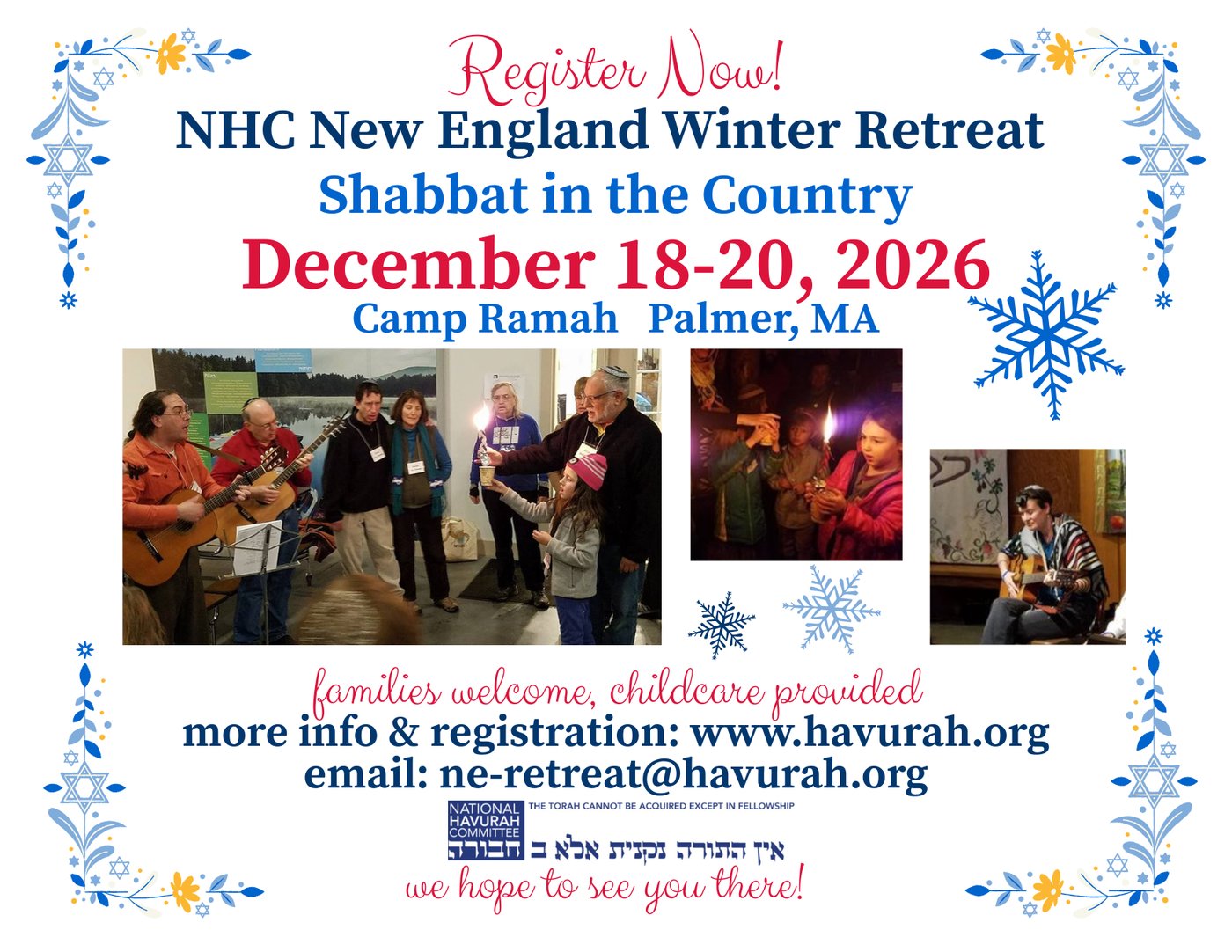
Winter Weekend Retreat in New England
Registration is now open!
Friday afternoon to Sunday lunch
Palmer, MA
Meals and lodging included
50% off may apply in western Mass. & southern VT
Register by November 23 to avoid the $35 late fee. See all fees
Register Online Download FormYour Weekend
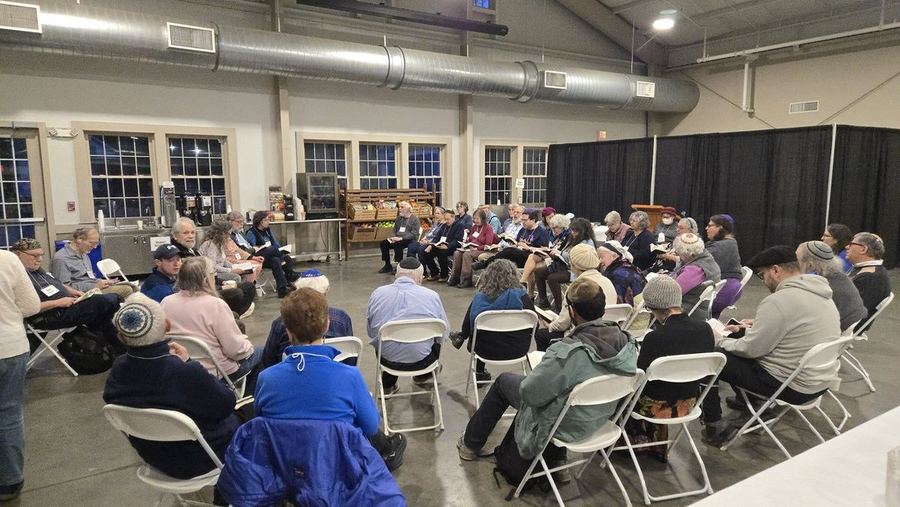
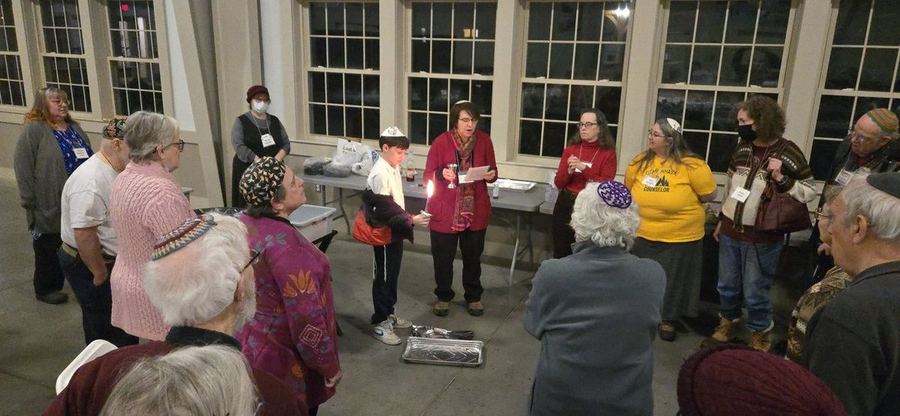
Light Shabbat candles and begin with a vibrant, musical Kabbalat Shabbat service, followed by dinner, singing and study. On Saturday and Sunday, join spirited prayer, walk in the woods or by the lake, study accessible texts, and apply Jewish values to issues of social justice. Learn new songs and stretch your body and your mind.
Courses meet Friday night, Saturday afternoon and evening, and Sunday morning, with many options to choose from. Each course session is approximately one hour.
Saturday night features a talent show, group singing and an open jam session. Bring your special talent!
Weekend at a glance
Check-in from 2 pm, candle lighting, welcome, Kabbalat Shabbat, Shabbat dinner at 6 pm*, tish, evening courses, then snacks and games.
Morning movement or Shabbat services, lunch and zmirot, afternoon courses, Minchah and prayers of hope and healing, Havdalah, dinner, evening courses, then NHC Prime Time and the Shuk.
Movement and meditation or morning minyan, more courses, then a closing gathering and lunch, ending around 1 pm.
* Let us know if you're arriving after dinner so we can save you a meal.
A detailed schedule will be shared closer to the retreat. Times may change.
For families
A children's program for ages 2–12 is run by experienced staff, with special Judaic programming for ages 6–12. Post-bar/bat mitzvah teens are welcome in the adult sessions.
The Location


Camp Ramah in New England
39 Bennett St, Palmer, MA 01069
Open in Google Maps
Camp Ramah in New England is in Palmer, MA, a few miles north of exit 63 (formerly exit 8) on the Mass Pike. It's about an hour from Boston or Hartford, 90 minutes from Albany or Providence, and 3 hours from New York City.
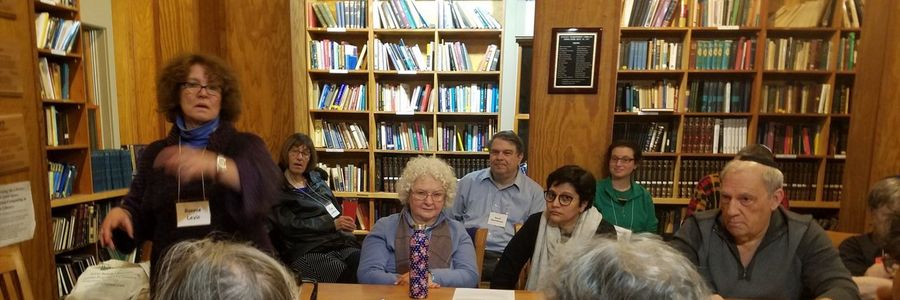
The site has a beautiful lakefront, wooded walking paths, outdoor assembly areas, lounges, seminar rooms, a beit midrash, a well-stocked Judaic library and a synagogue.
Accommodations are simple, uncrowded, comfortable and fully winterized. Single rooms and a limited number of motel-style suites are available. Meals are kosher, with vegetarian options.
Fees
Fees cover the full program, lodging, linens and all meals.
Register by November 23 to avoid a $35 late fee.
50% off for western Mass. and southern Vermont: participants from the 413 area code and southern Vermont may qualify for a Jewish Family Camp grant from the Harold Grinspoon Foundation. Learn more
| Program, room, linens & meals | |
|---|---|
| Adult, over 29NHC member | $295 |
| Adult, over 29Non-member | $325 |
| College student or age 29 and underNHC member | $199 |
| College student or age 29 and underNon-member | $245 |
| Child, age 2 through high school | $85 |
| Child, under 2 | Free |
| Room upgrades (surcharge) | |
| Private bedroom, shared bathroom | $120 |
| Private bedroom, private bathroom | $165 |
| Motel-style unitFully accessible, private bath · Limited availability | $195 |
| Commuters | |
| Program fee | $95 |
| MealsPer person, per meal | $20 |
| Optional | |
| Cancellation insuranceApplies your fees to next year's retreat | 10% of subtotal |
| Individual NHC membership | $60 |
| Family NHC membership | $120 |
| Tax-deductible contribution | Any amount |
Courses & Teachers
[1] “Hope Is a Rope”: Revisiting and Strengthening Our Hope in Seemingly Hopeless Times
In Hebrew, the word, tikvah means a rope and it also means hope. Why? What about ropes signifies a Jewish approach to hope? In this session, we'll look at Jewish sources on hope that can be especially hopeful in times like this which can feel hopeless.
[2] What Did Cain Say to Abel in the Killing Field? A Midrashic Mystery with Moral Meaning
Genesis 4:8 tells us that prior to killing him, Cain said or spoke something to Abel his brother. We're never told what Cain said. In this session, we'll examine a number of ancient Rabbinic sources that supply the backstories and teach some critical lessons along the way.
Dan Ornstein is the rabbi of Congregation Ohav Shalom and a writer living with his family in Albany, NY. He is the author of Cain v Abel: A Jewish Courtroom Drama (Jewish Publication Society 2020). Check out his writings and teaching at www.danornstein.com
[3] Grateful Jews: Jewish Connections to the World of the Grateful Dead
Jews seem to have a special relationship to the music and the phenomenon of the Grateful Dead. We’ll use R. Moshe Kordovero’s “4 Worlds” model to examine the physical, emotional, intellectual, and spiritual connections as we ponder questions such as: Who are important Jews in the Grateful Dead world? Does one of lyricist Robert Hunter’s own favorite lines evoke a beloved midrash? (You don’t have to be a Deadhead to join in.)
[4] Discovering D’ror Yikra: History, Text, and Tune
We’ll undertake an immersive exploration of this beloved Shabbat table song, uncovering its historical context, learning about its author, Dunash ben Labrat, and learning about its role in traditional Shabbat practice. We’ll also dive into its rich poetic language and explore its deep connections to TaNa”Kh and liturgy. Along the way, we’ll learn and sing four distinct tunes, tracing how different cultures have brought this powerful poem to life. Whether you’re looking to deepen your understanding of liturgical poetry or expand your Shabbat repertoire, all are welcome—no background experience required!
Scott A. Tepper (aka Reb Zisha) has served for decades as a ba’al tefilla and teacher in Boston’s Jewish community. A Brandeis Judaic Studies graduate and former Zamir Chorale singer, he created “Grateful Jews,” exploring Jewish connections to the Grateful Dead, which was recognized by the Grateful Dead Studies Association.
[5] A Pair of Psalms
Many of us are familiar with Psalm 34 from the Shabbat morning service. It includes a few lines that we often sing: “Who is the person who desires life?. . . “ Psalm 25, also an alphabetical acrostic, but not part of the liturgy, so less familiar to us, is strikingly similar. What does each Psalm have to tell us? Why are they so similar? Come and find out!
[6] “In the Cranny of the Rock”: Moses and God
In Exodus 33, after the disaster of the Golden Calf, Moses confronts God on the mountain and makes several requests of God, including the desire to “behold God’s Presence!” As we know, God gives Moses limited access to that presence. What is Moses really asking for? Why is access limited when we have biblical quotes that explicitly state that Moses already has this access? What’s the message here and what does this passage really mean? We will be getting some answers and a lot more questions!
Aliza Arzt is a long-time member of Havurat Shalom in Somerville, MA, and teacher at NHC retreats. She loves chasing Hebrew roots through the Tanach (Bible) and Midrash (Rabbinics) and sharing the results.
[7] Regina Jonas, Lost and Found
Regina Jonas was, as far as we know, the first woman ordained as a rabbi and her education, ordination, work, and murder all occurred in Nazi Germany. Her story was lost for a long time. How was Rabbiner Jonas rediscovered? How was she able to become a rabbi? What were her contributions? Why were her significant accomplishments unknown for years? This lecture will begin to answer these questions.
[8] Hanukkah: What Really Happened?
We will have just celebrated Hanukkah by the time of the Winter Retreat. Unlike most Jewish holidays, the Hanukkah story is supported by contemporaneous accounts. By comparing and contrasting different accounts we may be able to get a sense of what the actual events were like and what was embellishment. What exactly were we celebrating? Let's explore together.
Dale Rosenberg is a Jewish educator living in Oak Ridge, TN. She is an instructor at Oak Ridge Institute for Continued Learning (ORICL), is the Educator for Jewish Congregation of Oak Ridge (JCOR), and the co-director of the new HAOR Academy.
[9] Bible Stories You Didn't Learn in Sunday School
Blood, sex, murder, incest, and risqué Jewish texts. We will read several totally compromising texts from the Torah and the Prophets. English versions will be provided, and Hebrew knowledge is not required.
Ronnie Levin holds a graduate degree in Bible and Tefilah, and has been a popular Havurah teacher for years. According to Time Magazine (2024), Ronnie is also among the 100 most influential global health leaders.
[10] Shimon ben Shetach and the Witches of Ashkelon
What happens when the same Jewish story is retold for different times and audiences? We'll begin with Marilyn Hirsch's version of the story in the children's book The Rabbi and the Twenty-nine Witches, in which a rabbi outsmarts a band of magical witches. Then we'll travel back to a much more fantastic and disturbing version in the Jerusalem Talmud (Sanhedrin 6:6), and forward to The Great March, a reform textbook where the witches have a different fate. By comparing these and other retellings, we can explore what gets changed, what gets left out, and what those choices reveal about the Jewish values each storyteller wants to pass on.
[11] There and Back Again: Finding Jewish Wisdom in Children's Picture Books
Some stories take us on a journey only to bring us back to where we began but changed by what happened along the way. We'll explore the circular structure of several beloved children's picture books and the Jewish ideas and values they illuminate. Drawing on Could Anything Be Worse?, Caps for Sale, Corduroy, and The Treasure, we'll consider themes including Shabbat as a state of mind, rabbinic authority and experiential learning, actions vs words, mystical journeys and safe returns, and discovering treasures close to home.
Rose Myers is a retired Judaica librarian and software engineer. Her interests include Jewish text study (especially Midrash), folklore, children's picture books, ballet, 1930s movies, and storytelling.
[12] Grave Uncertainty: Why Do Jews Bury Their Dead?
We bury our dead. Why not cremation like the Hindus? Why not "sky burial" like the Zoroastrians? Why not mummification (like Lenin)? The Talmud's answer will surprise you.
[13] Torn
When words fail, the body speaks. We'll discuss "kriah," the Jewish practice of tearing one's clothing in mourning, as a window into how Judaism understands grief, the relationship between outer gesture and inner reality, and why some wounds are not meant to be mended.
Mosh, a long-time NHC teacher and a past Chair of the NHC, is a retired molecular biologist, and a recovering Yeshiva kid.
[14] Cityscapes: Travel Across Time & Space via Lea Goldberg and Yehuda Amichai's Poetry
Join us to explore skylines, streets, and ambiences of Israel's major cities through the eyes and verses of two renowned 20th century Israeli writers. Our poetic "itinerary" (texts) will be provided in the original Hebrew as well as English translation. No passport required!
[15] Explore the Moving, Complex, Controversial Hatikvah
How well do you know the stories behind Israel’s national anthem? Join us to discuss this stirring song – from inspirations of the original poem and how the lyrics evolved over the years, to theories about the tune’s origin and why it sounds similar to a classical masterpiece. We will hear a contemporary rendition and debate whether it is an ideal choice for the country’s anthem.
Dr. Miriam Rosalyn Diamond is an educator, writer, and former Israeli music DJ who dreams of writing song lyrics. She enjoys engaging learners ages 5 to 100 through the arts, games, lively discussions, and reflection.
[16] Ten Surprising Things About Pirkei Avot (Ethics of the Fathers)
As you may know, Joe has been studying, teaching, and writing about Pirkei Avot for the last six years. In this session, he will discuss some of the surprising things he has learned or discovered that are related to Pirkei Avot.
[17] The Abolition of Virginity
In Deuteronomy 22, we learn about the terrible consequences for a bride who can’t demonstrate her virginity. In this session, we will discuss how the rabbis essentially abolished the need for such demonstrations.
Joe Rosenstein has taught at many NHC institutes and retreats. He is the author of Siddur Eit Ratzon, Machzor Eit Ratzon, Memorable Verses in the Torah, and Reflections on Pirkei Avot: Not Just What My Rebbe Taught Me – all of which are available at www.joerosenstein.com – and, most recently, Pirkei Avot: The Big Picture, which is available from the publisher, Academic Studies Press, and from Amazon.
[18] Getting Lost to Find the Way: Torah on the Zoharic Road
Why does the Zohar (the foundational text of Jewish mysticism) so frequently find Torah outside the Beit Midrash study hall? We’ll explore how wandering and unexpected encounters become, for the Zohar, paths to unexpected revelation.
[19] The Kabbalah of Darkness
What does it mean to respond to darkness with Torah? We’ll explore how darkness becomes, for the Zohar, not only an absence of light but the source of redemption.
Geo Poor is a doctoral student at Spertus Institute of Jewish Learning and Leadership, where he is writing his dissertation on Midrash Hane'lam, one of the earliest strata of the Zohar. He is also the Controller at Temple Emanuel in Newton, MA, a creator of humorous Jewish memes, and a regular teacher in the Cambridge, MA area.
[20] Jewish Denominations
We will study the creation and sociological background of the major denominations and their evolution through time. We will look at the texts of prayer books to see the changes as well. We will discuss if denominations are relevant for our times. (Havurah movement will also be included).
[21] Soul Boom
We will look at excerpts from the book “Soul Boom.” The book captures the needs of the young people of our time. It shows how religion can meet those needs. We will get together in groups to discuss new ways at looking how we can design Jewish programs that can fill those needs.
Lisa Yorra attended Shaloh House Hebrew day school and Prozdor. She has been teaching Hebrew school since she was 19 years old at the Sharon Chavarah, and is still teaching Hebrew school to this day. She learned to appreciate the traditional side of Judaism from the day school and learned the beauty of creativity in Judaism from the Chavarah. Her day job is working as a social service coordinator assisting seniors.
[22] Clean Mind, Frolicking Infatuation
Love of nature, love of the senses, love between humans, and yearning love amidst family, economic and societal pressures. Shir haShirim, unlike other ancient erotic poems, is in the PG range if read 'simply'. Let's enjoy its gorgeous imagery, infatuation and yearning while taking on the parts of its handful of characters in a group reading.
[23] Planting a Tamarisk Tree in Beersheba
In Genesis 21:33, Abraham plants a tree after meeting with a nearby king. We will explore some texts as well as some guided meditation, about what that gardening might signify.
Rabbi Carl Woolf, PhD, has presented many times in NHC retreats. His roles include software engineer, as well as freelance teacher, clergy, and musician.
[24] Moses Mendelssohn, Herald of the Jewish Enlightenment
In the 1700’s, the European Jewish community experienced a sea change in religious approach, as the secular Enlightenment movement inspired the development of the parallel Haskalah or Jewish Enlightenment. A major figure in the Haskalah was Moses Mendelssohn, known among other achievements for his authorship of the first translation of the Bible from Hebrew into German, which effectively opened Jewish minds to the surrounding language, thought, culture, and society. Please join us to learn more about this fascinating figure and his impact on Jewish life and thought for centuries to come.
[25] The Seven “Noahide” Laws: Do Universal Standards of Morality Exist?
For the rabbis of the Talmudic era, moral standards existed as absolutes; cultural relativism was not part of their outlook on the world. They not only formulated the body of Jewish law called Halacha, consisting of 613 mitzvot, which guide Jews in living ethical lives in sacred covenant with God; they also viewed some basic moral standards as applying to all human beings. They formulated the seven “Noahide” laws to which, in their view, all ethical non-Jews are also bound. Do you agree that a universal standard of morality exists? Are standards for ethical behavior universal, or can they vary from one society to the next? We will study these 7 Noahide laws and discuss issues of universal morality and their relevance today.
Rabbi Judy Kummer has served congregations in New York, New Jersey and the Washington DC area. For 18 years she served as executive director of the Jewish Chaplaincy Council of MA. She is a board-certified chaplain currently working in a spiritual care private practice in the Boston area, providing pastoral visits, eldercare programing and lifecycle events.
[26] So That His Memory Lives On: Exploring a Few of the Stories of Mitch Chefitz, z"l
Mitch authored multiple novels, served as chair of the NHC, editor of a nationally syndicated weekly Torah column, and was a frequent teacher at Havurah institutes, rabbinic conferences, and other gatherings with a focus on Jewish renewal. We will share and discuss some of Mitch's stories from his novels: The Seventh Telling and The Thirty-Third Hour.
[27] Meditative Art - "Neurographic Drawing"
Meditative art is about process, not product, although most come out looking interesting as well. Neurographic art was developed by a Russian psychologist in 2014. Come spend an hour in peaceful play.
Sue Gulack is chair of the NHC. She is a Rabbi and former prison chaplain from Albany, NY, and has been exploring the spiritual, intellectual, emotional and physical worlds through prayer and study, art and music for a long time.
[28] Sound and Music as Vehicles to Worship and Participation?
What is it about the sound of prayer that moves people into meditative, contemplative, or even ecstatic states? Can sound, as an independent entity, become more powerful than content transcending the meaning of language? Many people who are not fluent in Hebrew are able to have highly meaningful prayer experiences using sound as their vehicle for entering prayer. This workshop explores the sound-prayer interface in religious observance focusing mainly on Jewish prayer but also considers other religious traditions.
[29] The Hidden Architecture of Shacharit
Why does the morning Shacharit service begin where it does and proceed as it does? What is the relationship between the blessings, psalms, Shema, and Amidah? Like a musical composition, the morning service is built from distinct movements that create a larger whole. In this session, we'll explore the structure, history, and purpose of the morning service, uncovering the connections between its different parts and gaining a deeper appreciation for the wisdom behind its design.
Ellen Band is a composer, Cantor and Torah reader (Cantorial Arts certification from Hebrew College 2003) , sound artist, and educator. She currently serves as a Cantor at Congregation Mishkan Tefila in Brookline, MA and Temple Beth Israel in Waltham, MA. She previously served as Director of Worship and Celebration at Congregation Kehillath Israel in Brookline, MA. Her many interests include Jewish prayer, sacred music, cantillation, and the role of sound in everyday life and spiritual experience.
[30] Spiritualize Your Inner Geek: Counting the Omer ("y'mean we get to say a blessing for speaking a number?!")
Come for a source-sheet exploration of the meaning of counting the days between Passover and Shavuot, drawing on traditional texts and Rachel Braun's background as a former statistician and math teacher. She'll incorporate some statistical and calculus concepts into the discussion.
[31] Teḥinot (Prayers) for Candlelighting: An Exercise in Intentionality?
A discussion-based class exploring the history of candle-lighting prayers (in particular, teḥinot for Shabbat candles), reading both contemporary examples and ones stretching back to the Middle Ages. We'll end with quiet pencil-and-paper time to craft our own teḥinot, to share or to hold close.
Rachel Braun is a long-time davenner, leyner, and teacher in the Fabrangen Havurah. She is a Judaic textile artist who has exhibited embroidery canvasses nationally. Rachel is the author of "Embroidery and Sacred Texts: New Designs in Judaic Needlework" and blogs at https://touroftorah.wordpress.com/
Frequently Asked Questions
When should I arrive?
Registration opens at 2:00 pm on Friday in the Chadar Ochel (dining hall). Please arrive by 3:45 pm so you can settle in before Shabbat candle lighting at 4:01 pm.
When does the retreat end?
The weekend ends with a closing gathering and lunch on Sunday, finishing around 1:00 pm. Please pack up and check out of your room before lunch.
Can I come for just part of the weekend, or commute?
Yes. Overnight guests can come for part of the weekend; contact us for more information. Commuters pay a $95 program fee plus $20 per meal.
How do courses work?
Courses meet Friday evening, Saturday afternoon and evening, and Sunday morning. When you register, you'll indicate your course preferences, which we use to put together the schedule. You don't need to sign up ahead of time for a particular course.
What if services aren't my thing?
You're welcome to take part as much or as little as you like. There's also time for singing and study, and alternatives such as movement and meditation.
What is the Shuk?
On Saturday night, retreat participants bring their books, handmade jewelry, kippot and other craft items to sell. A portion of the proceeds helps subsidize attendees at the NHC Winter Retreat, so please be generous!
What should I bring?
Linens and towels are provided. We suggest warm layers and boots for walking outdoors, a flashlight for the path between buildings at night, your tallit and siddur if you have favorites, an instrument for the jam session, and any items you'd like to sell at the Shuk.
How is Shabbat observed at the retreat?
We refrain from musical instruments at events where the entire group meets on Shabbat, though they may be used at smaller events, which will be noted on the schedule. Microphones are used. Please don't take photos on Shabbat, and if you must use your phone, please do so discreetly. Follow your own Shabbat practice regarding writing, using electricity in your room, and driving.
Is the site accessible?
Many rooms are accessible; some require one or two steps. The motel-style units are fully accessible, with private baths, but availability is limited. If you have concerns, please share your requirements when you register so we can place you accordingly.
The path between the dining hall and the Library/Beit Midrash complex is wooded and unpaved. If you have mobility concerns, let us know, and we'll try to schedule your courses in the dining hall to minimize walking outside at night.
What if I need to cancel?
No refunds are given. Optional cancellation insurance (10% of your subtotal) lets you apply your retreat fees to next year's retreat instead.
What are the health guidelines?
We will follow whatever Massachusetts and Camp Ramah guidelines are in force at the time of the retreat.
Other questions? Email ne-retreat@havurah.org
Ready to Join Us?
Register by November 23 to avoid the late fee.
Register Online Download FormWant to help organize or spread the word? Email ne-retreat@havurah.org